Homes in Morganton sit on soils that move more than many owners realize. A wet spring, a summer dry spell, or a hard freeze can shift the ground enough to stress footings, crack walls, and stick doors. Understanding how local weather and soil behave is the first step to protecting a home. It also helps explain why foundation repair Morganton NC often centers on drainage, moisture control, and stabilizing clay-heavy soils.
The soil profile that supports Morganton homes
Most neighborhoods in Morganton, Glen Alpine, Drexel, Valdese, and Salem lie on Piedmont residual soils formed from granite and gneiss. These soils often include red and brown clays with moderate to high plasticity. Clay shrinks as it dries and swells as it rehydrates. Sandier pockets drain faster but can erode under concentrated runoff. Many lots include fill from past grading, especially near newer subdivisions off Sanford Drive and along Jamestown Road, which can settle for years if it was not compacted well.
A foundation sits on only a few feet of soil, yet that thin layer drives how the structure behaves. If the top three to six feet cycle between wet and dry, the home moves with it. The goal is to keep that soil zone stable in moisture and protected from erosion.
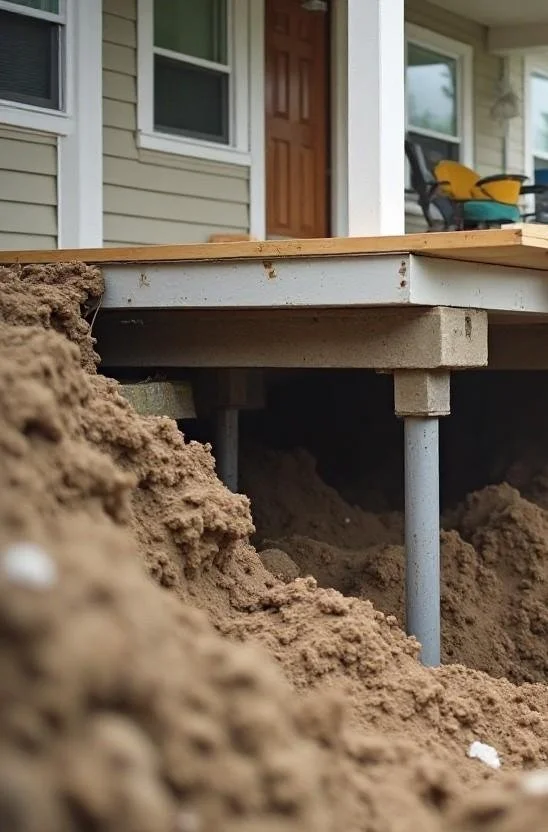
Weather patterns that drive movement
Morganton averages roughly 45 to 55 inches of rain a year, often in bursts. Late winter and early spring storms load the soil when vegetation is sparse. Tropical systems can dump inches in a day. Summer brings heat that dries clay and opens cracks in the yard. Winter freezes are less frequent than in higher elevations, but several nights near or below freezing can firm up wet soil and then release it, nudging a footing a fraction of an inch.
Those small shifts add up. A recurring pattern appears in service calls: after a wet month, owners see wider interior drywall cracks and damp odors in crawl spaces. After a hot, dry August, they notice gaps along trim and doors rubbing at the top latch. Both signs can point to soil movement under the foundation.
What movement looks like in a Morganton home
Settling and heaving show up in simple ways first. Hairline cracks appear over door corners. Baseboards separate from the floor. Brick mortar opens in a stair-step pattern along the side of a chimney. Floors feel out of level in a front room over a crawl space, especially in 1960s to 1990s homes with long spans and undersized piers. Concrete slabs by the garage or on the back patio tilt toward a downspout. In basements, water lines on the wall or flaking paint indicate hydrostatic pressure during storms.
A quick field example: a ranch off NC-181 had a recurring musty smell each March. The crawl space showed standing water and efflorescence on the block piers. The yard sloped toward the foundation, and two downspouts emptied right at the corner. Adding 10 feet of downspout extension, regrading the top 15 feet of soil to slope away, and installing a perimeter French drain dropped crawl space humidity by 15 to 20 percent and stopped seasonal odors. No structural fix was needed. The soil was the problem, and moisture control was the solution.
How water behaves around a foundation
Surface water and subsurface water both affect a home, but in different ways. Surface water from roof runoff and yard flow erodes topsoil and raises the moisture content along the foundation wall. Subsurface water builds pressure against basement walls and footings. Clay holds moisture longer, so once saturated, it keeps pressure on the wall for days.
A basement wall is strongest top-to-bottom but weakest sideways. When saturated clay presses against a block wall, it can bow inward a quarter inch or more across a long span. Cracks that are wider at the center of a wall than at the ends often point to lateral pressure, not settlement. On the other hand, diagonal cracks at window corners and stair-step cracks starting at the ends of walls tend to signal footing settlement.
Why some neighborhoods see more issues
- Lots near streams or the Catawba River floodplain have higher groundwater and softer soils. Homes along low points off N Powerhouse Road often need better sump systems and wall stabilization. Hillside lots in Oak Hill and parts of Amherst feel slope creep. Over years, gravity and water push soils downhill, pulling on foundations. Piering and tiebacks help resist that movement. Older homes in downtown Morganton may have shallow footings and fieldstone foundations. These can be stable for a century and then start moving after a major drainage change next door or a rooted tree removal that dries the soil.
Crawl space moisture and wood framing
Crawl spaces tie soil conditions directly to wood. High humidity feeds mold and softens subfloor edges. Seasonal moisture swings cause joists to cup and girders to deflect. Doors stick in late summer for this reason. Many calls labeled as “foundation repair Morganton Functional Foundations basement foundation repair near me NC” end with crawl space solutions: sealed liners, dehumidifiers, smart vents, and added support posts with steel jack systems under sagging areas. The structural fix only works long-term if moisture stays controlled.
Practical steps to stabilize soil and protect the foundation
Think in layers: keep water off the foundation, move water away from the home, relieve subsurface pressure, and stabilize structure where needed.
- Shape the ground: A simple 5 percent slope for the first 10 feet from the foundation helps. That is six inches of drop over 10 feet. In tight side yards, hardscape with a shallow swale can direct flow to the front or back without washing mulch. Manage roof runoff: Downspouts should discharge 10 to 15 feet from the foundation. Buried solid pipe with cleanouts works better than splash blocks in heavy storms. Use leaf guards or schedule gutter cleanouts each spring and fall. Control subsurface water: In basements, an interior drain with a quality sump pump and battery backup keeps pressure off the walls. In clay-heavy yards, a perimeter French drain wrapped in fabric reduces clogging and keeps trench stone clean. Stabilize structure where movement persists: Helical piers or push piers transfer the load to deeper, stable soils and can lift settled areas. Carbon fiber straps or steel I-beams can halt basement wall bowing. In crawl spaces, replace crushed piers and add adjustable steel supports under long spans. Regulate crawl space humidity: A sealed liner, sealed vents, and a properly sized dehumidifier keep wood under 15 percent moisture content. Pair that with a small condensate pump or gravity drain.
Weather timing and inspection habits
After a week of rain, walk the perimeter and look for ponding within three feet of the wall. Check for soft spots near downspouts. Inside, run a moisture meter on basement walls if you have one, or look for damp patches and a white powdery film. After a hot month, note new drywall cracks or wider trim gaps. If the same spots change with the seasons, the soil is moving those areas.
Contractors often use a zip level or laser to map floor elevations and compare them six months later. A difference of more than a quarter inch over a room size indicates active movement. That data helps decide whether to correct drainage alone or plan for piers.
What repairs cost in Morganton and why
Prices vary by access, depth, and scope, but local ranges help set expectations. A basic downspout extension and grading tune-up might run a few hundred to a few thousand dollars, depending on soil import and hardscape. Interior basement drainage with a quality pump often falls between $4,500 and $12,000 for typical footprints. Carbon fiber reinforcement for a straight wall can range from $500 to $900 per strap installed, spaced per engineer specs. Push or helical piers commonly price between $1,200 and $2,500 per pier, with typical jobs needing four to twelve piers along a settling section. Crawl space encapsulation with dehumidification often ranges from $5,000 to $12,000 based on size and details.
The right plan often mixes these elements. Installing piers without fixing drainage invites future problems. Drying the crawl space without shoring a sagging girder leaves doors sticking. A good inspection ties the symptoms to the cause and phases the work to control risk and cost.
Edge cases and judgment calls
Homes with expansive clay on one side and sandy fill on the other can twist, causing racking that confuses the picture. A chimney on a separate footing may settle while the main house stays stable, leaving a gap at the siding. Slab-on-grade additions tied to an older crawl space can move at different rates. In these cases, targeted piers at the addition and flexible sealants at the joint can relieve stress.
Tree removal can trigger settlement. Large oaks and maples along Bethel Road pull gallons of water per day in summer. After a removal, the soil rehydrates and swells, pushing on foundations or heaving nearby flatwork. When removing a mature tree close to the house, monitor grades and consider a root barrier if replanting.
Why local experience matters
Soil behavior is local. Two blocks apart, different builders used different fills and footing depths. A contractor who works daily in Morganton and Burke County knows which streets have groundwater issues, which neighborhoods used expansive red clay for fill, and which basements bowed after specific storm years. That experience shortens the path from symptom to solution and saves owners from paying for the wrong fix.
Ready for a clear plan?
For homeowners searching for foundation repair Morganton NC, the best step is a focused inspection that connects weather, soil, and structure. Functional Foundations documents floor levels, checks walls for movement, tests moisture, and traces drainage paths. The team explains options in plain language, with photos and pricing ranges, and prioritizes fixes that protect the home before they dress it up.
Request an inspection for your Morganton, Drexel, Valdese, or Glen Alpine home. Get a plan that manages water, stabilizes soil, and secures the foundation so doors work, cracks stop growing, and the house feels solid season after season.
Functional Foundations provides foundation repair and restoration services in Asheville, NC, and nearby areas including Hendersonville and Morganton. The team handles foundation wall rebuilds, crawl space stabilization, subfloor replacement, floor leveling, and steel-framed deck repair. Each project focuses on stability, structure, and long-term performance for residential properties. Homeowners rely on Functional Foundations for practical, durable solutions that address cracks, settling, and water damage with clear, consistent workmanship.
Functional Foundations
Asheville, NC, USA
Phone: (252) 648-6476
Website: https://www.functionalfoundationga.com, foundation repair Morganton NC
Map: View on Google Maps